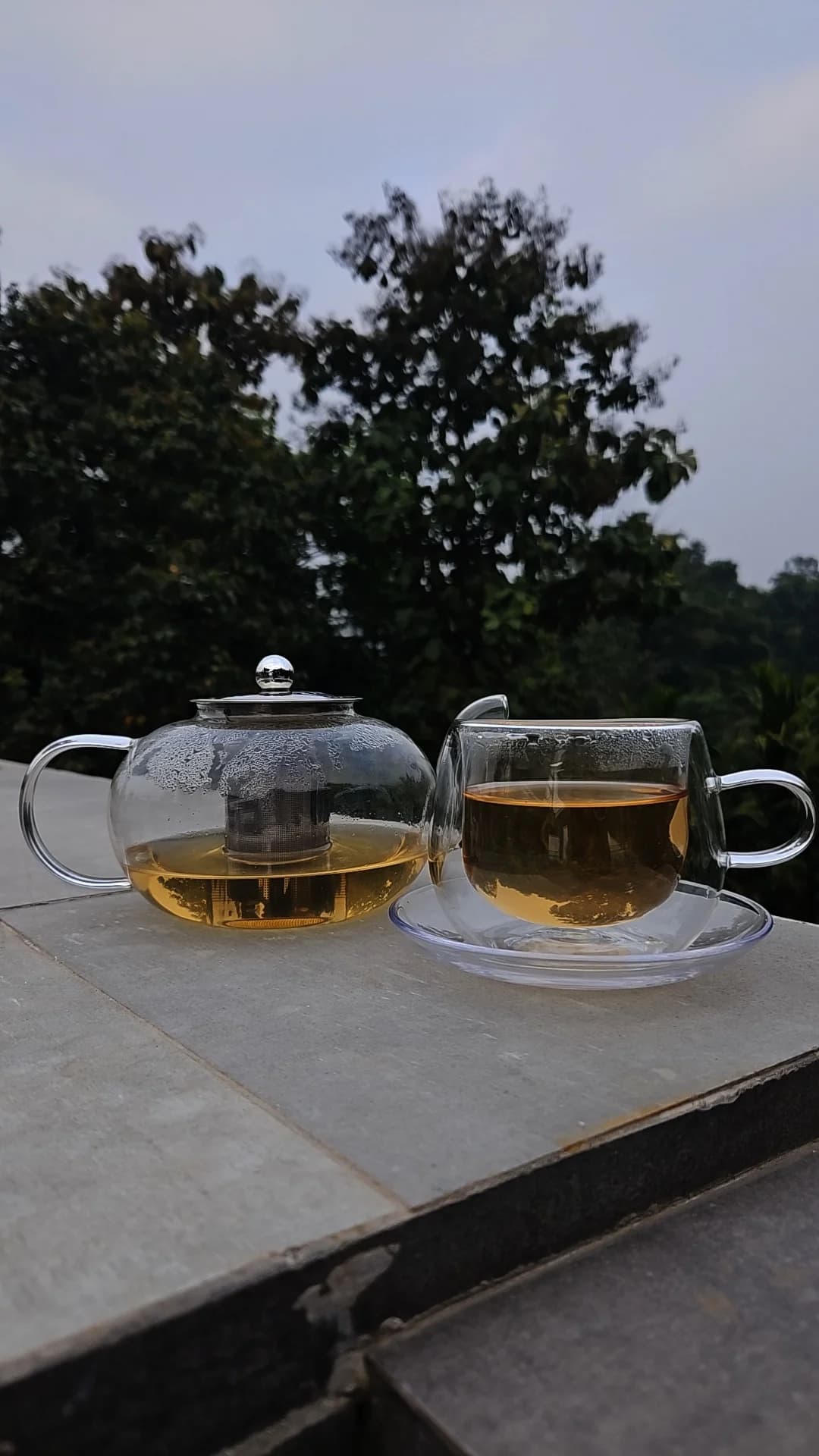
Bitter green tea is almost always a brew that went too hot, too long, or both. The bitterness is not an inherent property of the leaf — it is a temperature and time problem. And once you understand why, it becomes easy to fix permanently.
Why green tea turns bitter
Green tea contains catechins — a family of antioxidant compounds that give the leaf some of its character. The most abundant of these is EGCG. At low temperatures and short steeping times, EGCG is only partially extracted. The cup tastes bright, slightly sweet, with a clean finish.
At high temperatures (above 85°C), or with long steeping times, the catechins extract aggressively. So does the tannin content. Tannins are what make your mouth feel dry. When the catechin-to-tannin ratio tips, the cup goes bitter and astringent. That is the bad green tea most people remember from their first attempt.
Green tea bitterness is a brewing problem, not a leaf problem. The fix is cooler water and shorter time.
The two variables that matter most
1. Water temperature
Target: 80°C (176°F). This is the most important number in green tea brewing. If you do not have a thermometer, boil water and let it sit open for 4–5 minutes — that typically drops it to around 80°C.
For ZenTea's blends specifically: the added botanicals (pineapple, jasmine, lemon, ginger) are already dried and don't require higher temperatures. 80°C extracts both the tea and the botanicals cleanly without pushing into bitterness.
2. Steeping time
Target: 90–120 seconds (1.5 to 2 minutes). Start at 90 seconds for a first brew. If you want more body, push to 2 minutes. Beyond 2 minutes, bitterness starts to arrive in most whole-leaf greens.
The good news: whole-leaf tea is more forgiving than CTC on time, because the extraction is slower. A teabag at 2 minutes in boiling water is nearly always bitter. A whole leaf at 2 minutes in 80°C water usually isn't.
The amount of leaf
Use 1 rounded teaspoon (about 2–2.5g) per 200ml of water. More leaf does not necessarily mean more flavour — it can mean faster, more aggressive extraction and a more bitter cup. Start with one teaspoon and adjust from there.
Multiple infusions
One of the advantages of whole-leaf tea is that a single serving can yield 2–3 infusions. The first infusion should be the lightest. The second is often the most balanced. The third is lighter again, with a clean, sweet finish.
If you only ever brew one infusion and discard the leaf, you are missing about two-thirds of what you paid for.
Quick reference
Water temperature: 80°C
Steep time: 90 seconds to 2 minutes
Leaf amount: 1 rounded teaspoon per 200ml
These numbers work for all three ZenTea blends.